
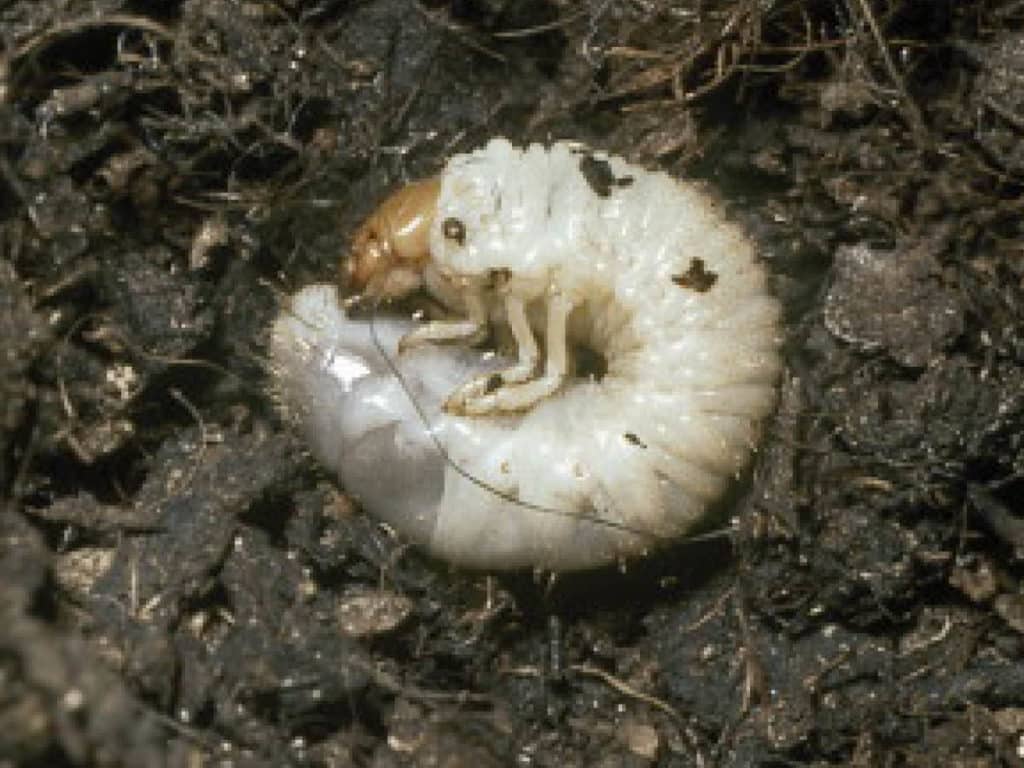
What are Chafer Grubs?
Many insects have two stages to their life. The first stage is called the larval stage. Caterpillars are in their larval stage, before becoming fully-grown butterflies. Chafer Grub is the name given to the larval stage of the chafer beetle. Before becoming chafer beetles, they are Chafer Grubs.
What do they look like?
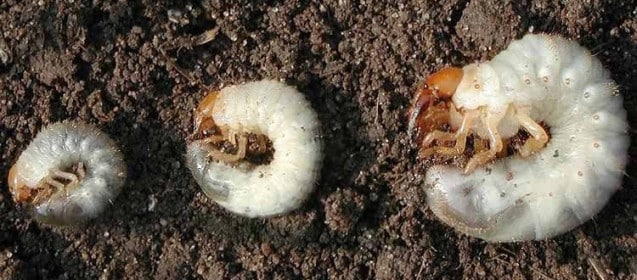
How can Chafer Grubs help a lawn?
Chafer grubs eat the roots of the grass plants. By doing this, they promote the growth of new, healthier roots. They also form part of the soil’s ecosystem—their cases break down into the soil once they pupate (turn into beetles), adding nutrients to the soil.
We’ve seen plenty of healthy lawns that contain small populations of chafer grubs. However, just like most other parts that make up a soil’s ecosystem, too many chafer grubs can cause damage to a lawn.
.
What sort of damage can they cause to my lawn?
In comparison to other grubs that reside in the soil of a lawn (for example, leatherjackets), chafer grubs can cause severe damage on lawns. Furthermore, the damage can be visible within a matter of days, and will get worse very quickly.
The damage is caused by two main factors:
- The chafer grubs – As we discovered earlier, chafer grubs feed on the roots of the grass plants. When the population of chafer grubs is balanced (i.e. not too many of them), they are beneficial to the overall health of the lawn. However, when populations increase, they will start to cause damage to the grass plants by eating too many roots too fast. The grass plants are unable to keep up with the amount of roots being eaten and will eventually die back. Unlike leatherjackets, chafer grubs eat through the roots horizontally, and will often eat a lot more roots at a quicker pace than leatherjackets. Eating through the roots horizontally causes a ‘carpeting effect’ whereby the turf can be lifted from the soil in a similar way you would be able to lift carpet from floor boards (see examples below).
Birds/predators digging and eating the leatherjackets – Birds and other predators can be very destructive to the lawn because they dig the chafer grubs out of the soil. As the population of chafer grubs increases, so too does the damage. It is not uncommon to see large areas of a lawn ripped up and destroyed by a combination of chafer grubs feeding on the grass roots, and birds or predators digging for them.
We’ve seen plenty of healthy lawns that contain small populations of chafer grubs. However, just like most other parts that make up a soil’s ecosystem, too many chafer grubs can cause damage to a lawn.
.
How do I know if I have chafer grubs in my lawn?
Chafer grubs are difficult to detect until the damage has started to occur. The first signs are areas of grass starting to look yellow / brown. These areas are often mistaken for other problems such as fungal diseases or compaction.
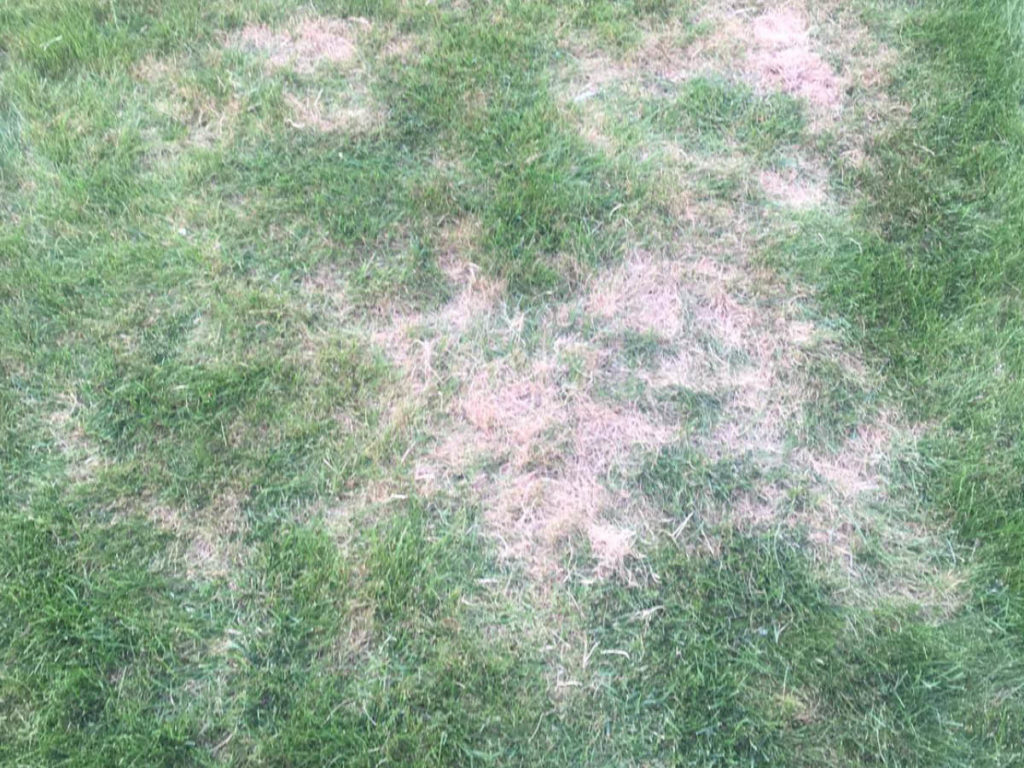
To determine if these areas of dying grass plants is caused by chafer grubs or another lawn problem, try lifting the dead grass plants. If the grass plants lift away easily from the soil, it is most probably chafer grubs. If the plants do not lift easily and are still attached to the soil via their roots, then it is most likely a different lawn problem.
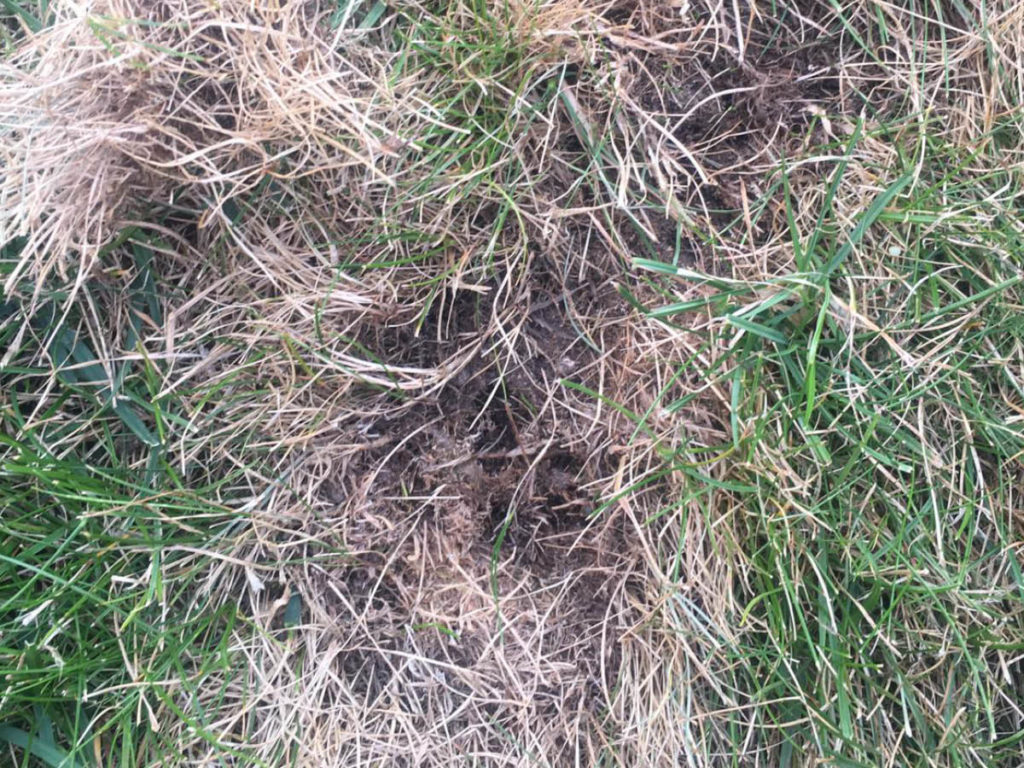
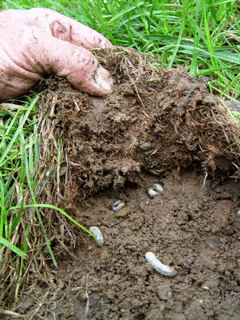
Over time, if left untreated, the affected areas will start to develop a ‘carpeting effect’ whereby the turf is easily lifted away from the soil surface. Much like carpet being lifted away from floor boards.
As the chafer grubs continue to eat the roots of the grass plants, the affected area will get bigger and bigger. In some case, an entire lawn can be decimated within a matter of days.
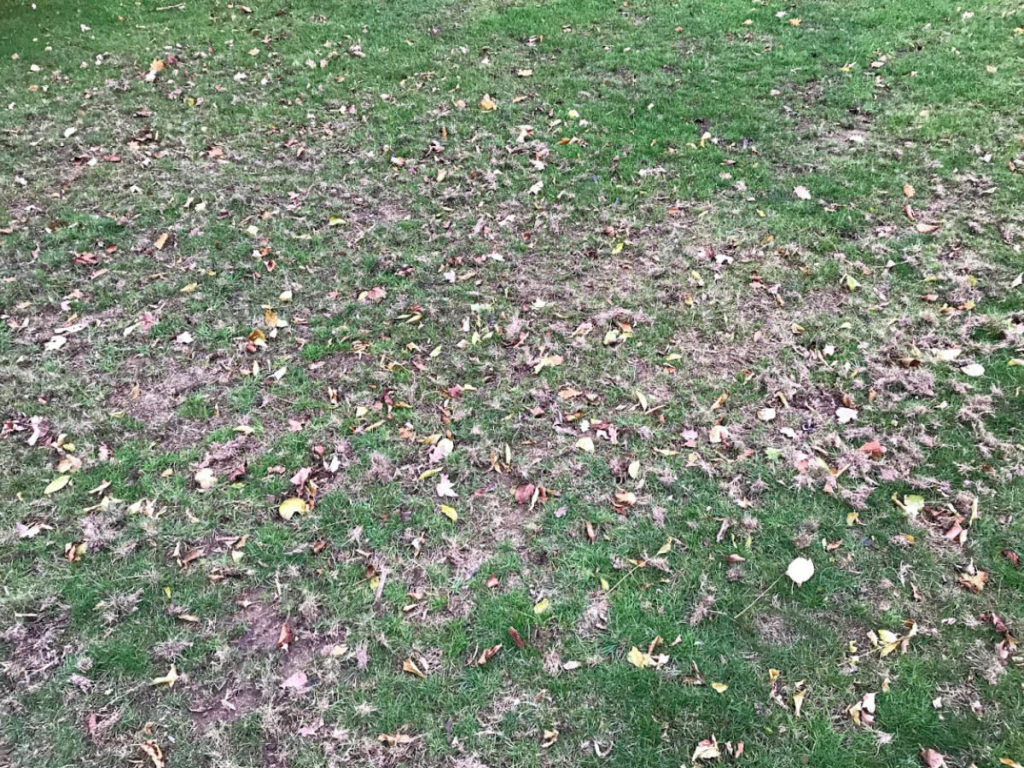
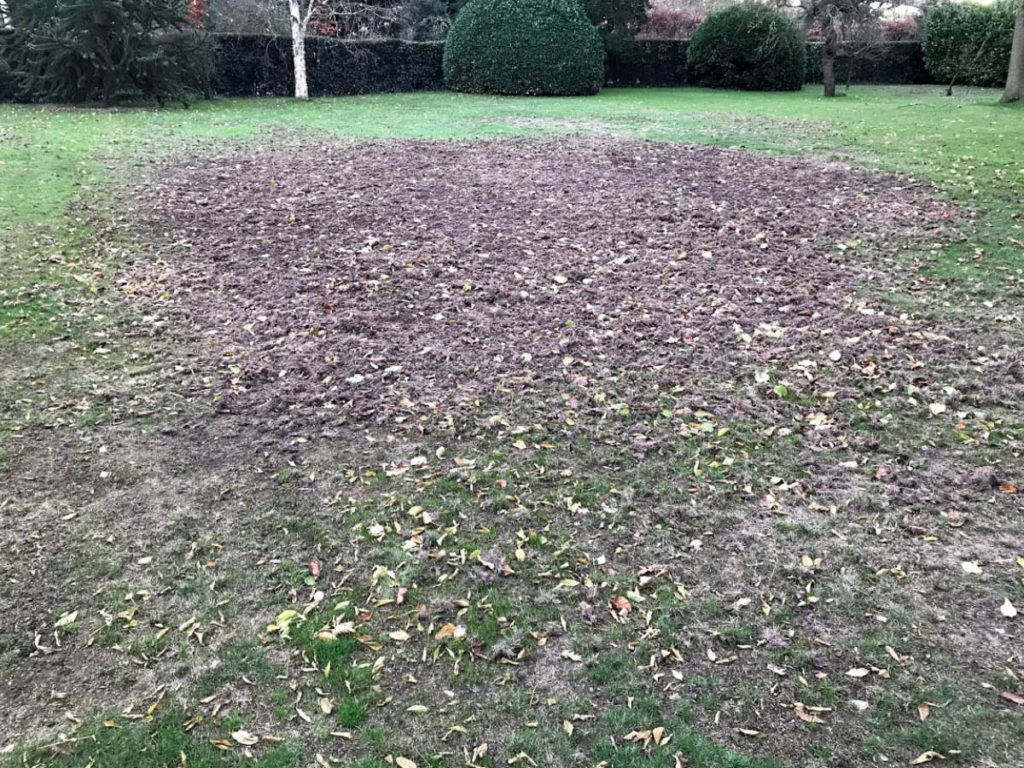
The above two pictures were taken just one week apart. The growth of the affected area and the destruction of this area was quick.
How do they get there?
In the UK, adult chafer beetles usually lay their eggs from late May through June.
Here’s the simple breakdown:
Adult chafers emerge from the soil in late spring
They mate shortly after
Females lay eggs in the lawn between late May and the end of June
Eggs hatch roughly 2 to 3 weeks later into young chafer grubs
How does Green Man Lawn Care control them?
Green Man Lawn Care uses Acelepryn, the leading professional treatment for controlling both leatherjackets and chafer grubs. It is widely recognised as the most effective and safest product available for long lasting, targeted control.
When Acelepryn Can Be Applied?
Optimal window: May to late July
Reason: Acelepryn works best when applied during the early to mid larval stages, shortly after adult chafers lay their eggs. This is when the grubs are small and most susceptible.
Why Acelepryn Is the Gold Standard?
- Controls Leatherjackets and Chafer Grubs with one specialist treatment.
Long residual activity that protects the lawn through the main feeding period.
Safe for families and pets once dry.
No harm to bees or beneficial insects.
Backed by UK regulatory approval for targeted grub control.