
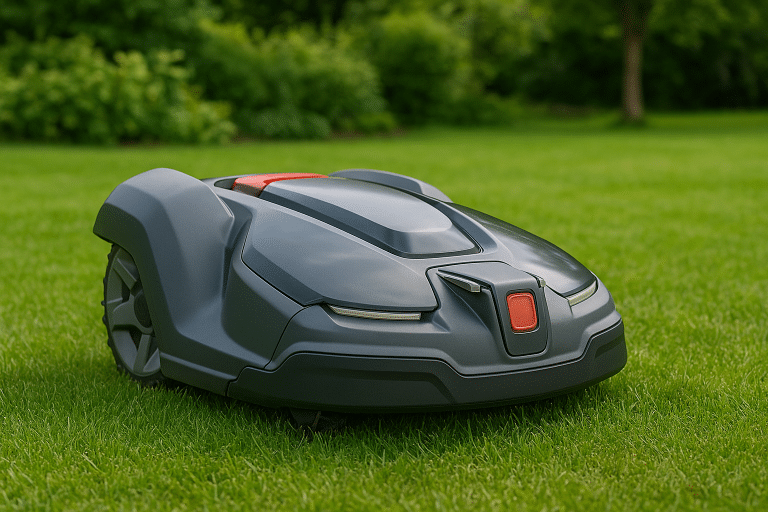
If you use a robotic mower, there are a few important things to keep in mind when preparing your lawn for professional treatments. Every robotic mower system is installed slightly differently, so making sure we understand your setup helps us deliver the best results without damaging your equipment.
Different Types of Installations
Robotic mower generally fall into one of the below:
Underground Boundary Wire
A boundary wire buried just beneath the surface marks the perimeter. Some systems also use a home wire (or guide wire) running from the charging base into the lawn to help the mower return reliably.Surface-Level Boundary Wire
In newer or temporary setups, the boundary wire may be pegged onto the surface. Over time, grass typically covers it—but it can still be visible in fresh installations.Additional Guide Wires
Some layouts include extra wires to navigate around obstacles like flower beds or pathways.No Wires at All
Some newer robotic mower systems work without perimeter wires, using GPS or camera guidance instead. Even in these cases, we still need to know if there is anything else buried in the ground that could be affected by machinery.
What You Need To Do
Advise Us in Writing – When you give us the go-ahead to begin treatments, please email us with the make and model of your robotic mower and the method of wiring used (e.g., underground, surface-level, or a mix of both). This ensures we’re aware of your system before any work is scheduled.
Mark the Wires Clearly on Treatment Day – On the day of scarification or aeration, it is essential that you clearly show us where all wires are located and mark them using visible, safe markers (e.g., bamboo sticks or garden flags).
Switch Off the Mower – For safety, please ensure the mower is powered down and docked before we start.
Optional Tool Recommendation – For added peace of mind, you might consider purchasing a robotic mower wire detector, sometimes referred to as a cable break detector. This device helps trace and verify the location of boundary and guide wires—and can help detect wires more easily.
Why This Matters
Our treatments may involve powerful machinery, including equipment that penetrates the ground during processes such as scarification and aeration. If wires are not marked or located properly, they may be damaged—potentially preventing your robotic mower from operating correctly and leading to costly repairs.
Important
It is the customer’s responsibility to provide details of their robotic mower system (make, model, and wiring method) before treatments begin and to mark all wires on the treatment day. While we always take care during our work, we cannot be held liable for any damage to wires that are not clearly identified or marked.